You speak to a computer, not to a person. That makes it strange, and for many people stressful — and it is exactly why practising out loud helps so much.
A2: 35 minutes on the computer with a microphone; B1: about 30 minutes.
Four types of question: video, 1 picture, 2 pictures, 3 pictures.
DUO’s A2 oefenexamens have 16 questions.
Keep talking, use full sentences and always give a reason.
The result for Spreken A2 currently takes up to 16 weeks: plan it early.
Part 1 often asks two questions in one: answer both.
What does the exam look like?
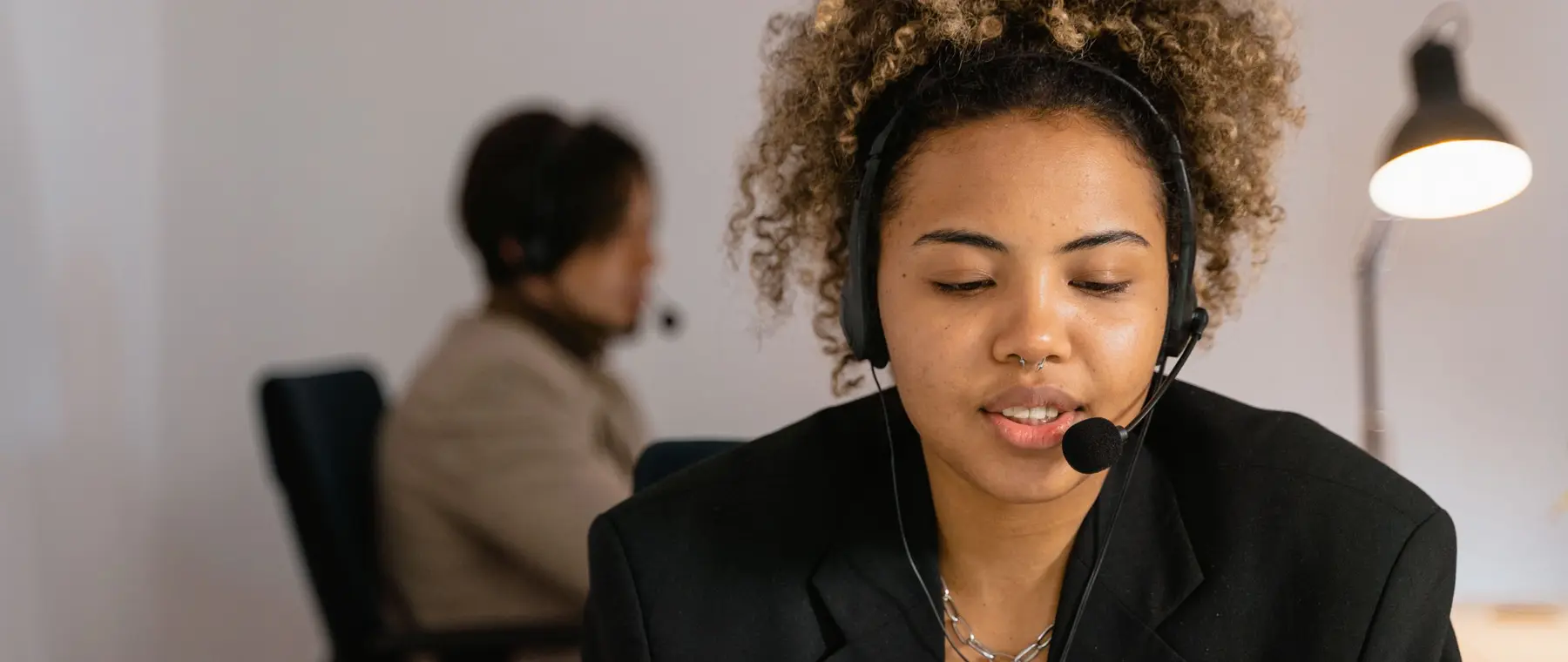
You sit at a computer with headphones and a microphone. You see a video or a picture with a
question, and you record your answer by speaking. So there is
no examiner sitting opposite you.
A2
B1
Duration
35 minutes
about 30 minutes
How
On the computer, with a microphone
Staatsexamen NT2, see staatsexamensnt2.nl
In DUO’s oefenexamens (practice exams)
16 questions
see staatsexamensnt2.nl
Assessment
Partly automatic, partly by assessors
By assessors
DUO: "Het examen Spreken op niveau A2 doet u op de computer. U moet Nederlands spreken en verstaan. U bekijkt filmpjes en u beantwoordt vragen. Het examen duurt 35 minuten." (You take the exam Spreken at level A2 on the computer. You have to speak and understand Dutch. You watch videos and you answer questions. The exam takes 35 minutes.) The exams Spreken at level B1 and B2 (staatsexamen Nt2) take about 30 minutes.
The start screen of DUO’s own oefenexamen Spreken A2 says it literally: there are four types of
question. That is the most practical way to divide up your preparation.
A question with a video
Someone speaks to you and asks you something. You answer as you would in real life — short, direct, and to the point.
A question with 1 picture
You see one photo. Usually you have to say what you see, or what you would say or do in that situation.
A question with 2 pictures
Two options next to each other. You choose one and you explain why. The "why" is the point.
A question with 3 pictures
Three images that together form a short story. You tell what happens, in order.
The start screen of DUO’s public oefenexamens Spreken A2 says: "Het examen heeft vier soorten vragen: vragen met een video, vragen met 1 plaatje, vragen met 2 plaatjes, vragen met 3 plaatjes. U mag 35 minuten over het examen doen." (The exam has four types of question: questions with a video, questions with 1 picture, questions with 2 pictures, questions with 3 pictures. You may take 35 minutes for the exam.) The counter shows 16 questions.
You get a limited speaking time for each question and the recording starts by itself. You cannot redo an answer. That feels uncomfortable, but it also means: keep talking is better than starting again.
What are you assessed on?
Spreken is assessed partly automatically and partly by people. Broadly speaking, four things
matter at the same time.
"Het examen Spreekvaardigheid wordt gedeeltelijk geautomatiseerd en gedeeltelijk door gecertificeerde beoordelaars nagekeken en beoordeeld." (The Speaking exam is marked partly automatically and partly by certified assessors.) You are assessed on whether you are understandable, not on speed.
Did you answer the question? A beautiful story about something else gives you nothing.
Can you be understood? Pronunciation and speed. Calm and clear is better than fast.
Do you use enough language? Two words is too little, even if they are correct. Make sentences.
Does it keep going a bit? Hesitating is allowed; falling completely silent costs you the recording.
Amber van der Zalm · NT2 teacher
The biggest problem with Spreken is not the language but the silence. Students think for three seconds, then say one word, and the recording stops. Keep talking, even if you are unsure. Say "let me think for a moment", say it in other words, repeat the question. Anything is better than saying nothing.
Approach for each type of question
1
With a video: react like a person
Someone asks you something. Answer as you would at a counter: short, friendly, with a reason. "Yes, that is fine, because I am free that day."
2
With 1 picture: name it, and expand
First say what you see, then where, then what is happening. Three sentences instead of one. "I see a man in a shop. He is standing at the till. He is paying with his pinpas (debit card)."
3
With 2 pictures: choose and give reasons
Choose quickly — which one you choose does not matter. All the points are in the "because". "I choose the bike, because it is close by and because it is cheaper than the bus."
4
With 3 pictures: tell it in order
Use sequence words: first, after that, then, finally. They turn separate sentences into a story, and that is exactly what is being asked.
Do
Speak clearly and not too fast, with your mouth close to the microphone
Use full sentences, also for a simple question
Always give a reason — a "want" or "omdat" (because) almost always earns points
Correct yourself out loud if you say something wrong; that is allowed and it does not count against you
Do not
Stay silent in order to think
Whisper or turn away from the microphone
Recite a learned story that does not fit the question
Answer only "yes" or "the bike"
Five tips from the classroom
These are the things that most often go wrong for students, and that you can unlearn in a week.
1. Listen to the whole question — there are often two in it
Amber van der Zalm · NT2 teacher
Part 1: listen very carefully to the question. Two questions are asked, not one. For example: "Ik doe mijn boodschappen bij Albert Heijn. Waar doe jij je boodschappen? En hoe vaak per week?"
In that example there are two things you have to say: where you do your
shopping and how often. If you answer only "Bij de Lidl", you miss half the
question. Listen to the end before you start thinking about your answer, and count the
question words in your head — waar, hoe vaak, waarom, wanneer.
Every question word is one thing that has to be in your answer.
Half an answer
Bij de Lidl.
Complete answer
Ik doe mijn boodschappen bij de Lidl. Ik ga twee keer per week.
2. Under time pressure, choose ‘want’, not ‘omdat’
When speaking you have no time to repair a sentence. Want leaves the word order alone;
omdat sends the verb to the end of the clause, and under time pressure that goes wrong.
"Ik ga met de fiets, want het is dichtbij" simply stays as it is;
with "omdat het dichtbij is" you have to move the verb. The exception: to a direct
waarom question you do answer with omdat. The full explanation is in
Want or omdat.
3. Two short sentences are better than one long one
At A2 you are assessed on whether you speak clearly and correctly, not on whether you build
complex sentences. A long sentence that collapses halfway scores less than two sentences that are
right.
4. Do not forget ‘me’ and ‘zich’
Ik voel me goed. Ik bereid me voor. Ik kan me
concentreren. Dropping that little word is one of the most audible mistakes, and in speech it stands
out more than on paper. The twenty verbs you need at A2 are in
Dutch reflexive verbs.
5. Keep talking until time is up
Given your answer and still have time? Add one sentence: an example, a reason or a detail. "Ik
doe boodschappen bij de Lidl. Ik ga twee keer per week. Het is dichtbij mijn huis."
That third sentence costs you nothing and lets you show more Dutch.
Nerves and the microphone
Almost everyone finds it uncomfortable to speak into a computer. That is normal, and you can
train it — by doing it often, not by avoiding it.
Record yourself with your phone. The first time is strange, the fifth time is not.
Listen back to your recording. You hear straight away if you speak too softly or fall silent too often.
Practise out loud, also on your own: describe what you see in the street, in full sentences.
Do at least one complete oefenexamen with headphones and a microphone.
Amber van der Zalm · NT2 teacher
In class I let students listen back to their own recording. That is confronting, and it is the fastest learning moment of the whole course. Almost nobody hears themselves being silent for as long as they really are.
Waiting time: plan this part early
Just like Schrijven, Spreken A2 is assessed by people, and at the moment there is a longer
waiting time for that.
On 31 July 2026 DUO announced that marking the exams Spreken A2 and Schrijven A2 was at that moment taking up to 16 weeks, with an automatic extension of six months for people who get into trouble with their inburgeringstermijn (integration deadline) because of this. For the other exams the usual period of 8 weeks applies.
That is a news item and it can change; check with DUO before you plan. But as long as it
applies: do not take Spreken last. If you fail, you still have the waiting time
for the result and for the resit ahead of you.
Practise Spreken with assessment per criterionRecord your answer as in the exam and get feedback on content, intelligibility and language use.
In part 1 that happens regularly. For example: "Waar doe jij je boodschappen? En hoe vaak per week?" Those are two things that both have to be in your answer. Count the question words and answer both of them, in two short sentences.
May I correct myself while speaking?
Yes. Correcting yourself is normal speech and is not penalised. Correct it once and keep talking — starting over completely costs time you do not have.
Do I have to speak fast?
No. Calm and understandable earns more than fast and unclear. You are assessed on whether you are understandable, not on speed.
Do I speak to a real person in the exam Spreken?
No. You sit at a computer with headphones and a microphone. You see videos and pictures with questions, and you record your answer by speaking. There is no examiner sitting opposite you, and you cannot ask for anything to be repeated.
What kind of questions do I get in Spreken A2?
According to the start screen of DUO’s own oefenexamen there are four types: questions with a video, with one picture, with two pictures and with three pictures. With two pictures you choose one and explain why; with three pictures you tell in order what happens.
What do I do if I do not know the answer?
Keep talking. Silence never gives you points, half an answer sometimes does. Say the question back in your own words, name what you do see, or give a reason why you are unsure. You may also correct yourself out loud; that does not count against you.
How can I practise Spreken if I have no Dutch conversation partner?
Out loud, on your own, with a recording. Describe what you see in full sentences and record yourself with your phone. Then listen back: you hear straight away if you speak too softly, go too fast or stay silent too long. Also look for a taalmaatje (language buddy) or taalcafé through the library or VluchtelingenWerk.
How long does the result of Spreken take?
Normally within 8 weeks. On 31 July 2026 DUO announced that Spreken A2 and Schrijven A2 were at that moment taking up to 16 weeks, with an automatic extension of six months for people who get into trouble because of this. Check the current situation with DUO and do not plan this part last.
Reviewed by Amber van der Zalm, certified NT2 teacher — August 23, 2026 This page is a translation of that reviewed Dutch text; the translation itself was not reviewed. The Dutch version is the source.
Practise the exam part SprekenSpeaking tasks with feedback per criterion, written by an NT2 teacher.View the modules